
In the rapidly evolving UAE construction sector, digital project delivery has shifted from an optional upgrade to a strict contractual mandate. Government bodies and large-scale developers in Dubai and Abu Dhabi are aggressively enforcing bim standards iso 19650 for all new construction tenders and digital handovers. This means that if you are a local contractor aiming to secure major project wins, simply knowing how to draft a 3D model is no longer sufficient. You must prove complete digital maturity by demonstrating exactly how you will manage, secure, and deliver complex project data over the entire lifecycle of a built asset.
For many contractors, this international framework appears daunting. However, by partnering with specialized experts like BIM Cloud, you can demystify these requirements, streamline your information delivery, and significantly increase your chances of winning high-value tenders.
Demystifying iso 19650 requirements
At its core, the ISO 19650 framework is about structured information management. When a client issues a tender, they will provide an Exchange Information Requirements (EIR) document. This critical document outlines their precise iso 19650 requirements, dictating what data they need, when they need it, and in what format.
Contractors must respond to this EIR by submitting a comprehensive BIM Execution Plan (BEP)[cite: 328]. This BEP details exactly how the contractor’s supply chain will meet the client’s demands. Navigating this iso 19650 workflow requires strategic expertise. It is not just about choosing between LOD 300 vs LOD 400 for your models; it involves defining strict naming conventions, establishing precise BIM clash detection protocols, and proving that your team understands how to govern a massive digital database effectively.
The Importance of a Common Data Environment (CDE)
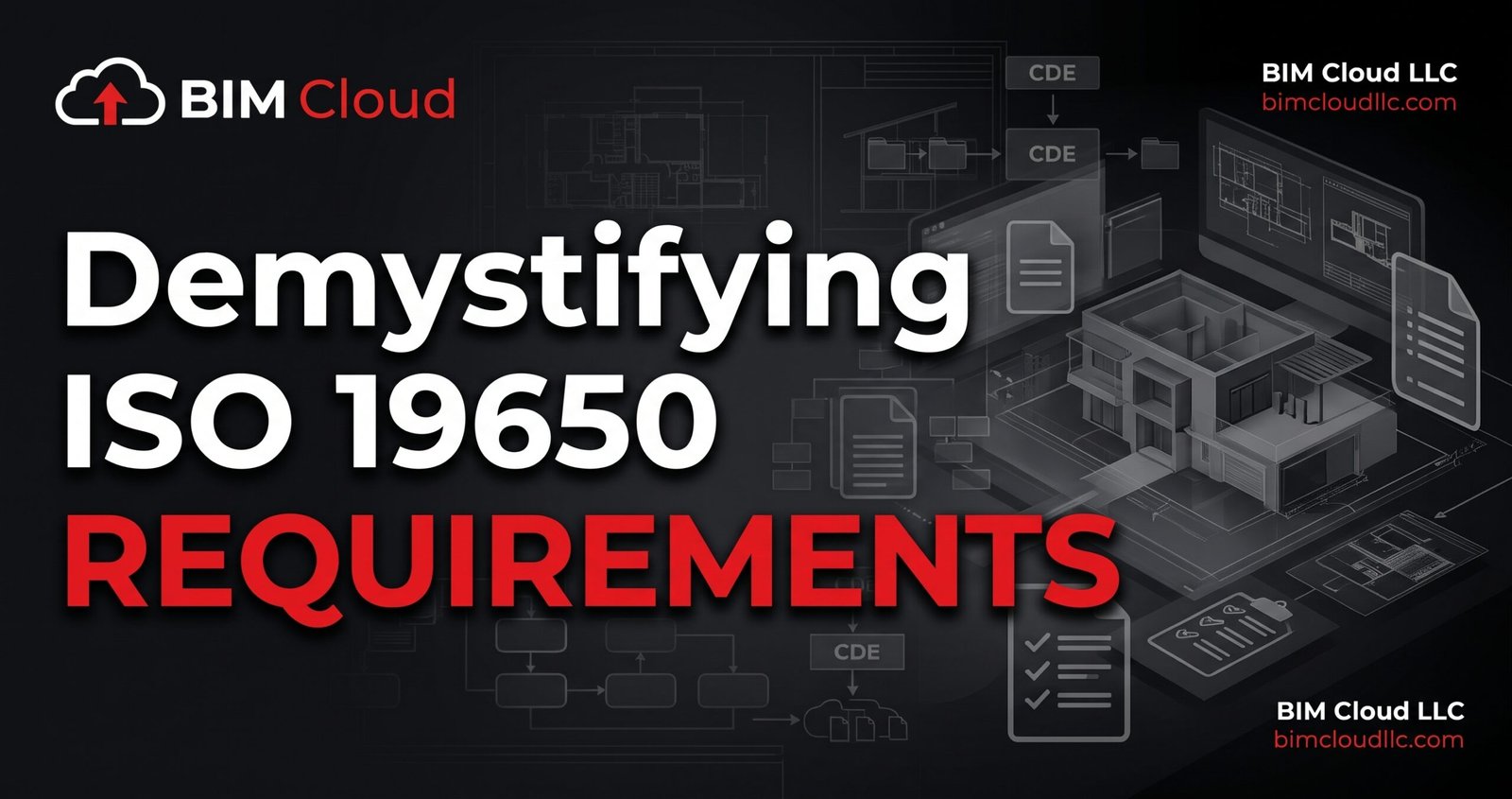
You cannot achieve compliance with bim standards iso 19650 without a robust Common Data Environment (CDE)[cite: 328]. The CDE is the central digital hub where all project information is collected, managed, and disseminated. It acts as the single source of truth for the entire project team.
Setting up a compliant CDE involves configuring strict access controls, defining clear approval gates (such as “Work in Progress” to “Shared” to “Published”), and ensuring that every piece of data is fully traceable. When BIM services are executed properly within a CDE, the risk of contractors working from outdated drawings is completely eliminated, drastically reducing expensive on-site rework.
Securing Project Wins with Compliant Documentation
Many mid-tier contractors lose out on lucrative mega-projects simply because their digital documentation fails the client’s pre-qualification audit. Submitting generic, downloaded templates for your BEP is a guaranteed way to have your bid rejected.
A successful tender submission requires a bespoke strategy that reflects the unique complexities of the physical build. As demonstrated across our diverse project portfolio—which includes landmarks like the Jeddah Stadium and The Mars DAMAC[cite: 331]—we help contractors author fully compliant documentation that passes the most rigorous client scrutiny. By clearly defining information management roles and utilizing advanced software platforms like Autodesk Construction Cloud[cite: 328, 329], we ensure your digital handover meets the highest international benchmarks.
Frequently Asked Questions (FAQs)
- What is ISO 19650 BIM standards?
It is an international standard for managing information over the whole life cycle of a built asset using Building Information Modelling (BIM). It provides a unified framework for collaborative working, ensuring that the right digital information is delivered securely to the right people at the right time. - What are BIM standards?
BIM standards are established rules and protocols that dictate how digital models and project data should be created, named, structured, and shared. They ensure consistency, interoperability, and quality control across all disciplines (architectural, structural, and MEP) working on a construction project. - What is ISO 19650 compliance?
Compliance means that a project team is strictly adhering to the information management processes outlined in the ISO 19650 framework. This includes successfully responding to the client’s EIR, operating within a secure Common Data Environment (CDE), and delivering all required asset data according to the agreed-upon BIM Execution Plan (BEP).